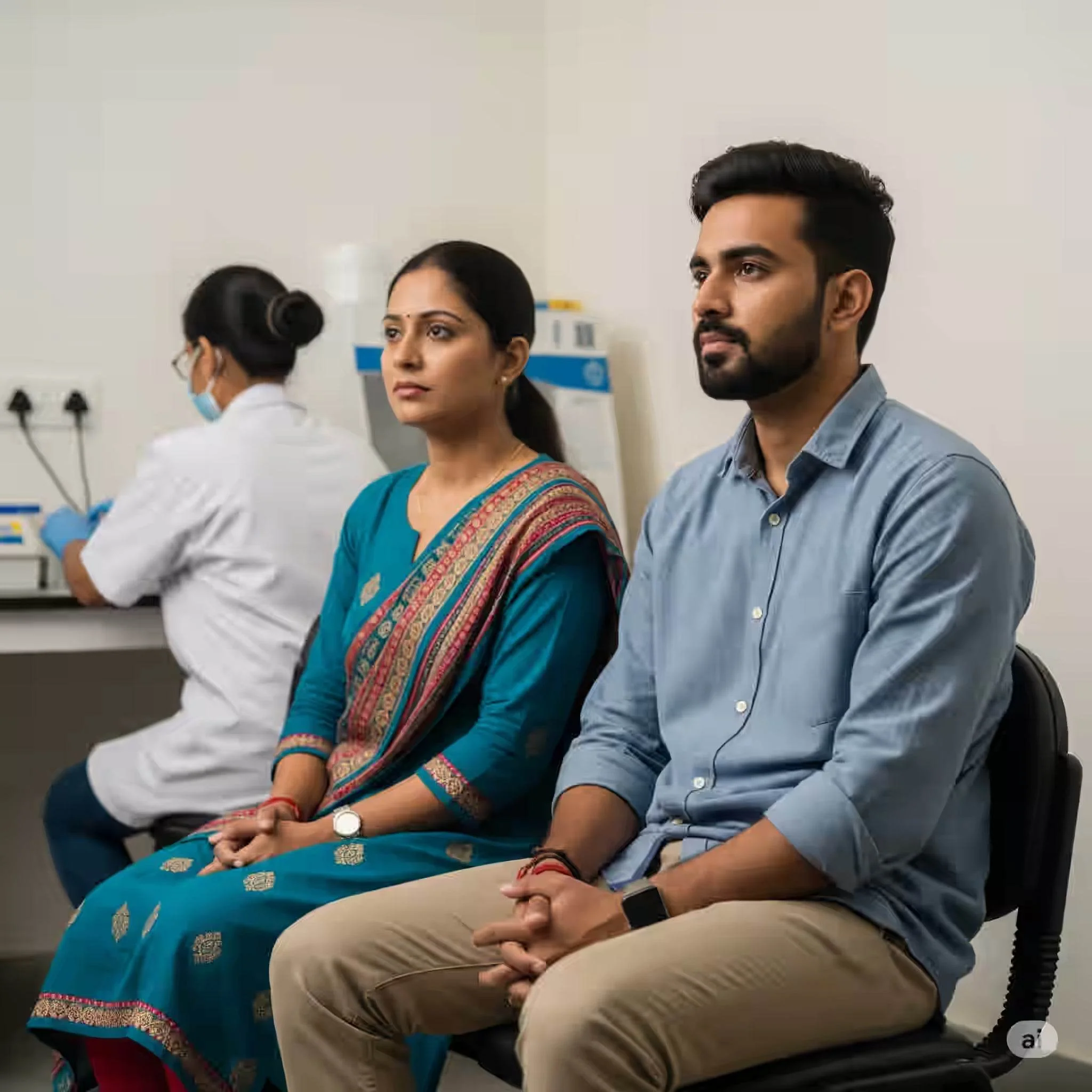
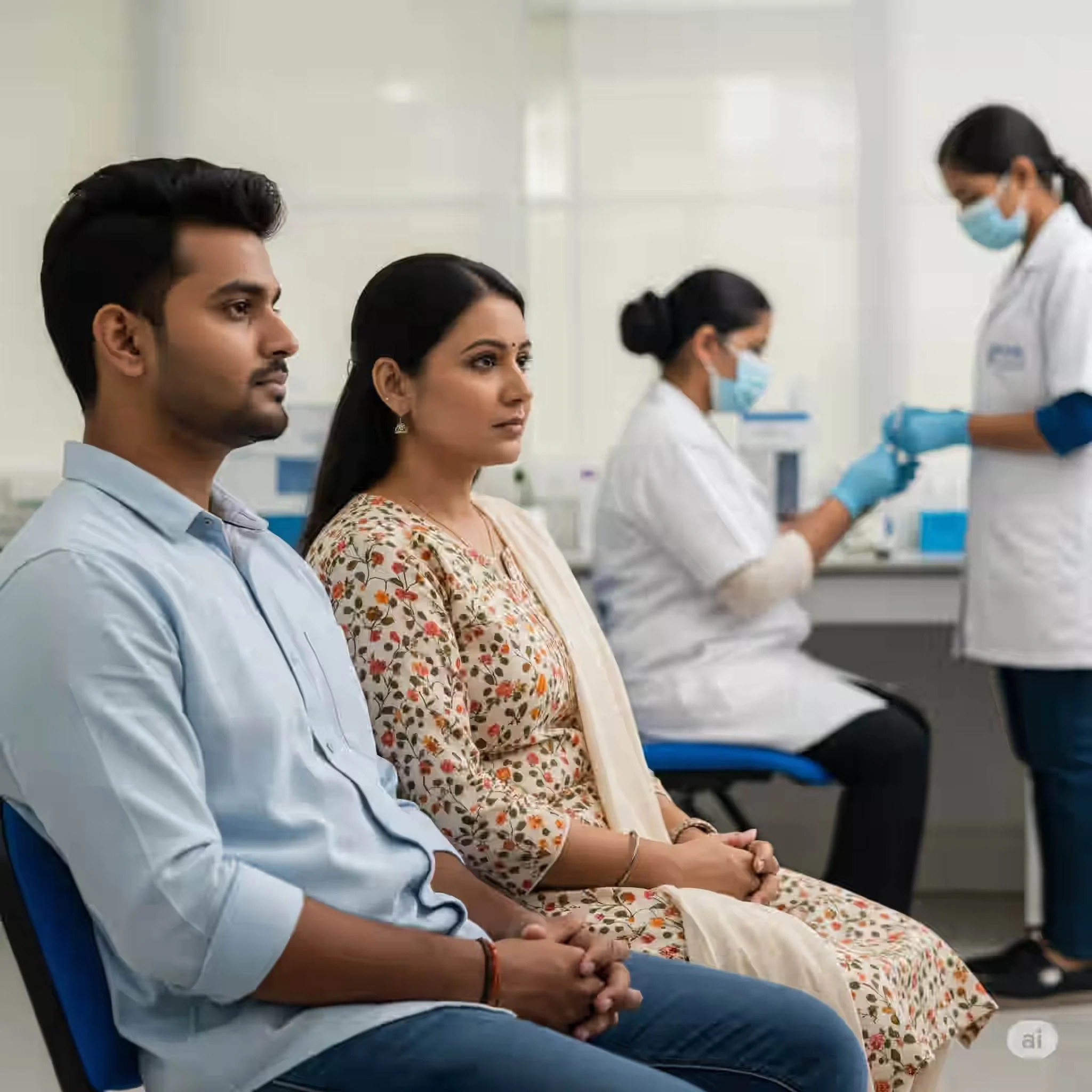
HIV Screening Test
HIV Screening Test
Direct answer: This test screens for Human Immunodeficiency Virus (HIV) infection to support early diagnosis and timely treatment.
The HIV Screening Test is a blood test that detects markers of Human Immunodeficiency Virus (HIV), a virus that attacks the immune system. Early detection helps prevent progression to Acquired Immunodeficiency Syndrome (AIDS) and reduces transmission risk. Screening tests may detect HIV antibodies, HIV antigen, or HIV RNA, depending on the method used. This ensures accurate identification of infection at different stages.
This test is available at healthcare nt sickcare with home collection facility in Pune and direct walk-in sample submission at our Aundh centre. Samples are processed through NABL-accredited partner laboratories with secure digital reporting for patients across Pune, Maharashtra.
Key Points About HIV Testing Window Period
Direct answer: Different HIV test methods detect infection at different time frames after exposure.
- HIV RNA PCR: Shortest window period of approximately 7–14 days after exposure.
- Combo Antigen/Antibody Tests: Detect infection earlier than standard antibody-only tests.
- Antibody Tests: Typical window period ranges from 45 to 60 days.
- Rapid HIV Tests: Reduce window period compared to traditional ELISA, usually around 28 days.
Who Should Consider This Test?
Direct answer: Individuals with possible HIV exposure, high-risk behaviour, or routine health screening needs.
This test is commonly advised after unprotected sexual contact, needle-sharing exposure, during pregnancy screening, before surgeries, or for routine health checks. Early HIV detection supports immediate medical care and prevents further transmission.
Patient Resources
Frequently Asked Questions
When should I do the HIV screening test?
Why is this test advised?
Is fasting required before this test?
What symptoms may prompt this test?
Original: $4,999.00
-70%$4,999.00
$1,499.70Product Information
Product Information
Shipping & Returns
Shipping & Returns
Description
HIV Screening Test
Direct answer: This test screens for Human Immunodeficiency Virus (HIV) infection to support early diagnosis and timely treatment.
The HIV Screening Test is a blood test that detects markers of Human Immunodeficiency Virus (HIV), a virus that attacks the immune system. Early detection helps prevent progression to Acquired Immunodeficiency Syndrome (AIDS) and reduces transmission risk. Screening tests may detect HIV antibodies, HIV antigen, or HIV RNA, depending on the method used. This ensures accurate identification of infection at different stages.
This test is available at healthcare nt sickcare with home collection facility in Pune and direct walk-in sample submission at our Aundh centre. Samples are processed through NABL-accredited partner laboratories with secure digital reporting for patients across Pune, Maharashtra.
Key Points About HIV Testing Window Period
Direct answer: Different HIV test methods detect infection at different time frames after exposure.
- HIV RNA PCR: Shortest window period of approximately 7–14 days after exposure.
- Combo Antigen/Antibody Tests: Detect infection earlier than standard antibody-only tests.
- Antibody Tests: Typical window period ranges from 45 to 60 days.
- Rapid HIV Tests: Reduce window period compared to traditional ELISA, usually around 28 days.
Who Should Consider This Test?
Direct answer: Individuals with possible HIV exposure, high-risk behaviour, or routine health screening needs.
This test is commonly advised after unprotected sexual contact, needle-sharing exposure, during pregnancy screening, before surgeries, or for routine health checks. Early HIV detection supports immediate medical care and prevents further transmission.
Patient Resources
Frequently Asked Questions
When should I do the HIV screening test?
Why is this test advised?
Is fasting required before this test?
What symptoms may prompt this test?